
Transforming researchers journey to insights in scientific and academic research
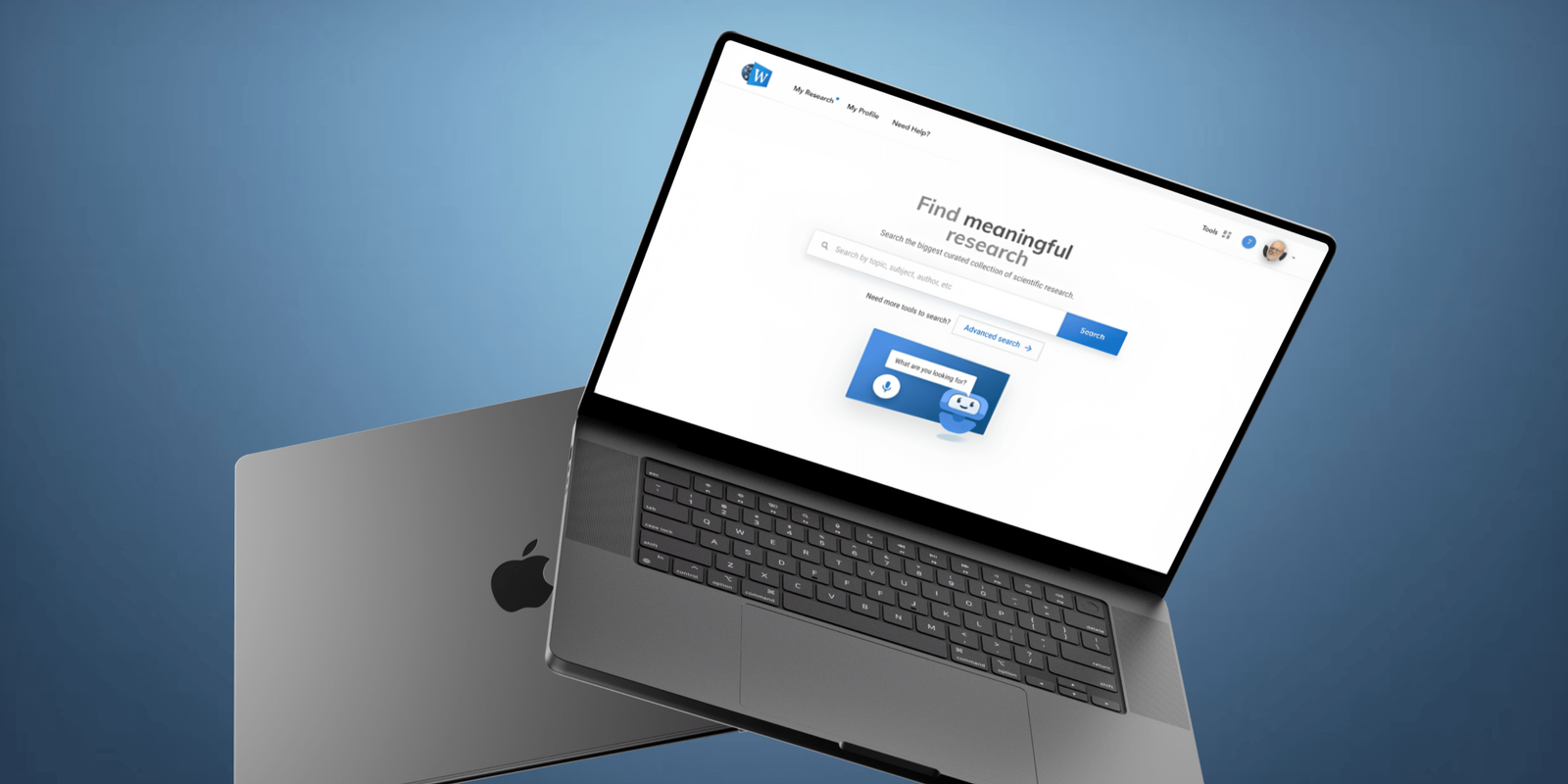
A global corporation providing trusted insights and analytics for scientific and academic research wanted to enhance and optimize their search functionality. We employed our design thinking methodology to design a next-generation search that was simplified, intuitive, and outcome-focused.
Information Services & Enterprise
Context and objective
Delivering an enhanced customer experience and creating a roadmap (or prototype) for the long-term improvement of the digital product portfolio.
 Industry
 Scientific research
SolutionAI model development, AI sprint, Design, Low-code solution, Product design sprint
Year2019
ChallengesOur client, a global leader providing trusted insights and analytics for scientific and academic research, wanted to enhance and optimize their search functionality to make navigation more optimized and user-friendly. The application had to search over 166 million records to provide results and was accessed by over 8 million researchers, students, and academics in varying age brackets and with differing levels of technological dexterity. The users were also accustomed to the existing interface since the application had been in use for over 15 years.
ApproachWe built detailed profiles of the different user types and conducted a thorough examination of the end-to-end user journey for academics and students. We isolated all the hurdles experienced by the users and the key issues that made their search experience clunky. We also studied competing products and the user experience they provided. We employed our design thinking methodology to design a next-generation search that was simplified, intuitive, and outcome-focused.
Solution
Windmill was commissioned to improve an existing digital product and make research across journals, scientific research papers and other online records easier and less time consuming.
Since ‘search’ is the basis of research, we conceptualized a redefined search to completely transform the user experience. However, we had to keep in mind the demographic disparity in the massive user base and their varying levels of technological proficiency. Thus, the new experience and design had to be clean, intuitive, and compelling enough to warrant a change in user behavior and encourage a transition to the new product format
Designing to build
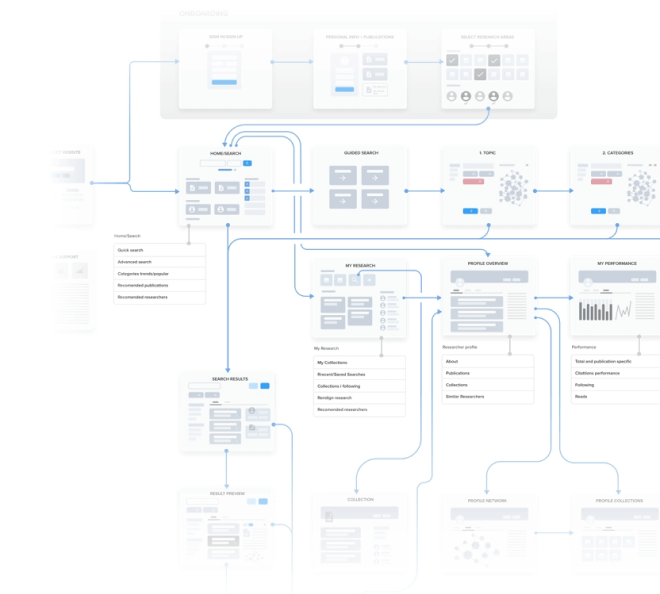
A design sprint defined the unique needs of academicians and researchers and the key touchpoints to transform. We mapped customer journeys to conceptualize an end-to-end search-experience for researchers to find meaningful material and build their own research base.
We also showed how this would impact customer expectations from the other products in their portfolio.
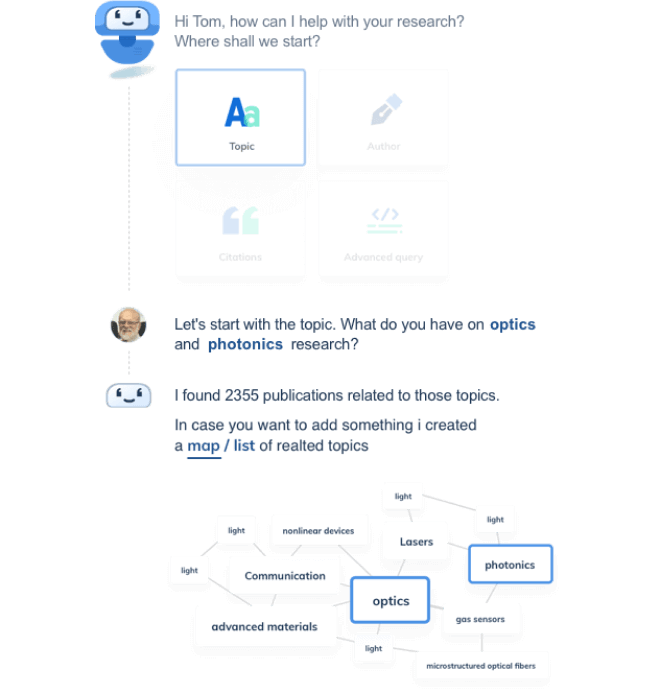
AI-powered guided search for intelligent results
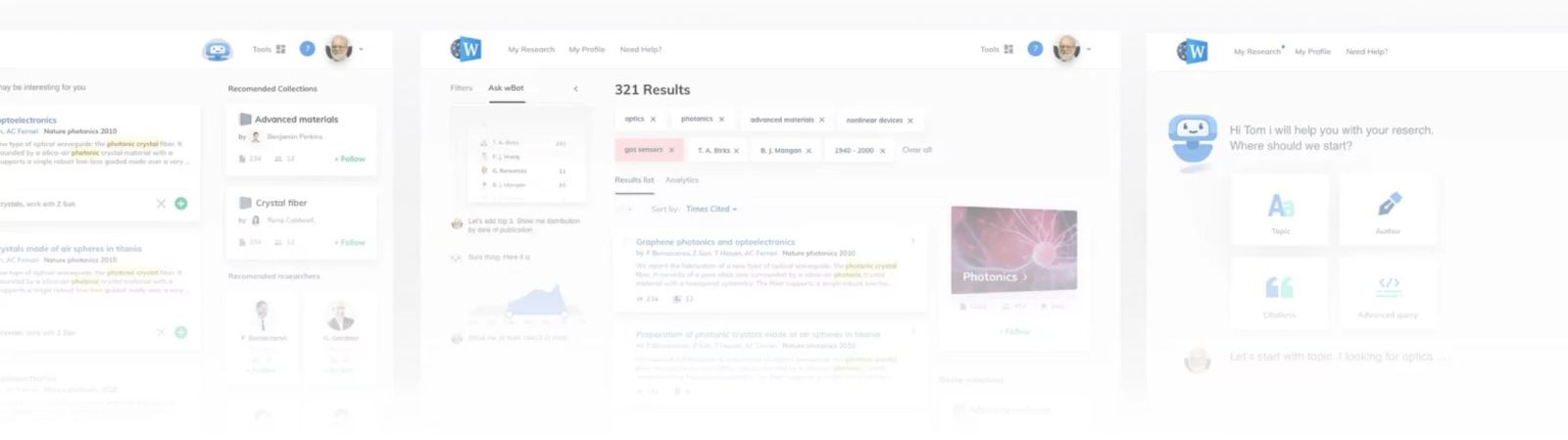
A simple, intuitive, engaging, and minimalistic design with optimized data display and visual search to present “infographic-like” results and graphical views for easy consumption.
Guided search and AI-assisted chatbot to assist and direct the less technically adept users.
Personalized outcomes
An intuitive and appealing search display summarizes information from a massive library of records and reference sources. “Group and show” search results across various parameters like author, category, publication, and present various text and visual formats aligned with user preferences.
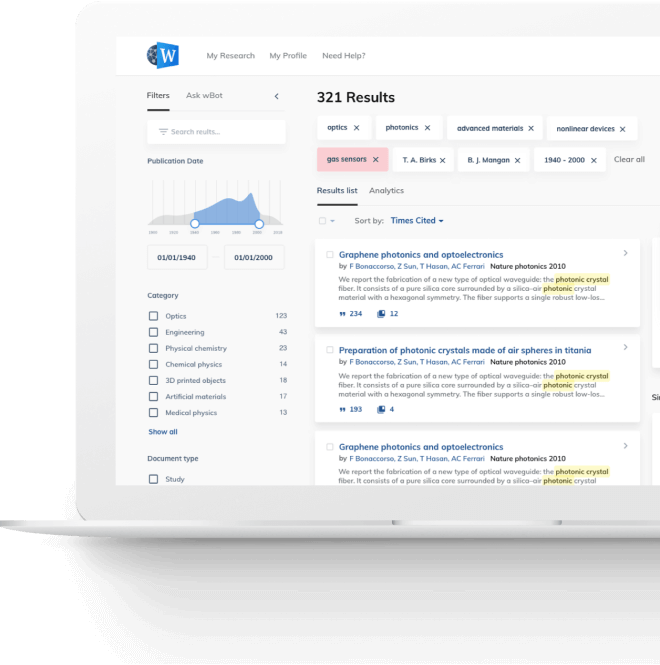
Easy building of repositories
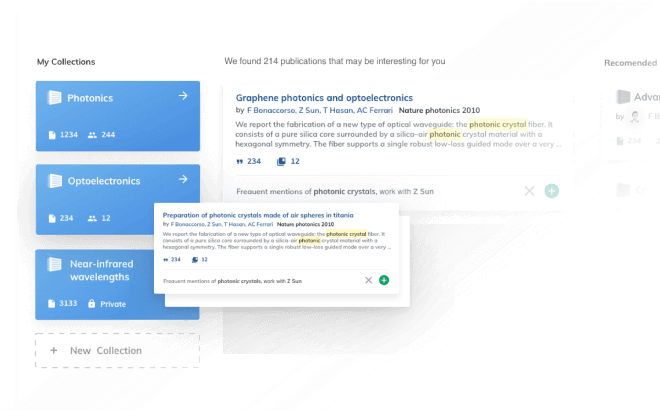
Build collections of research papers, citations, and academic journals and publish papers easily using ‘drag and drop’ functionality. Share these collections with fellow academics and fellow researchers for seamless collaboration.
Impact
Our solution transformed the search experience. Researchers are now able to find exactly what they are looking for and work on their research papers quickly and easily.
This application redesign has become the prototype for an ongoing transformation exercise for the other products in the client’s portfolio focused on researchers.
Start with the engagement that matches the work in front of you.
Windmill can join at early direction, proof, production or evaluation of a live system. Existing work does not have to be restarted or replaced.
More Work
Related Case Studies
AI · Development
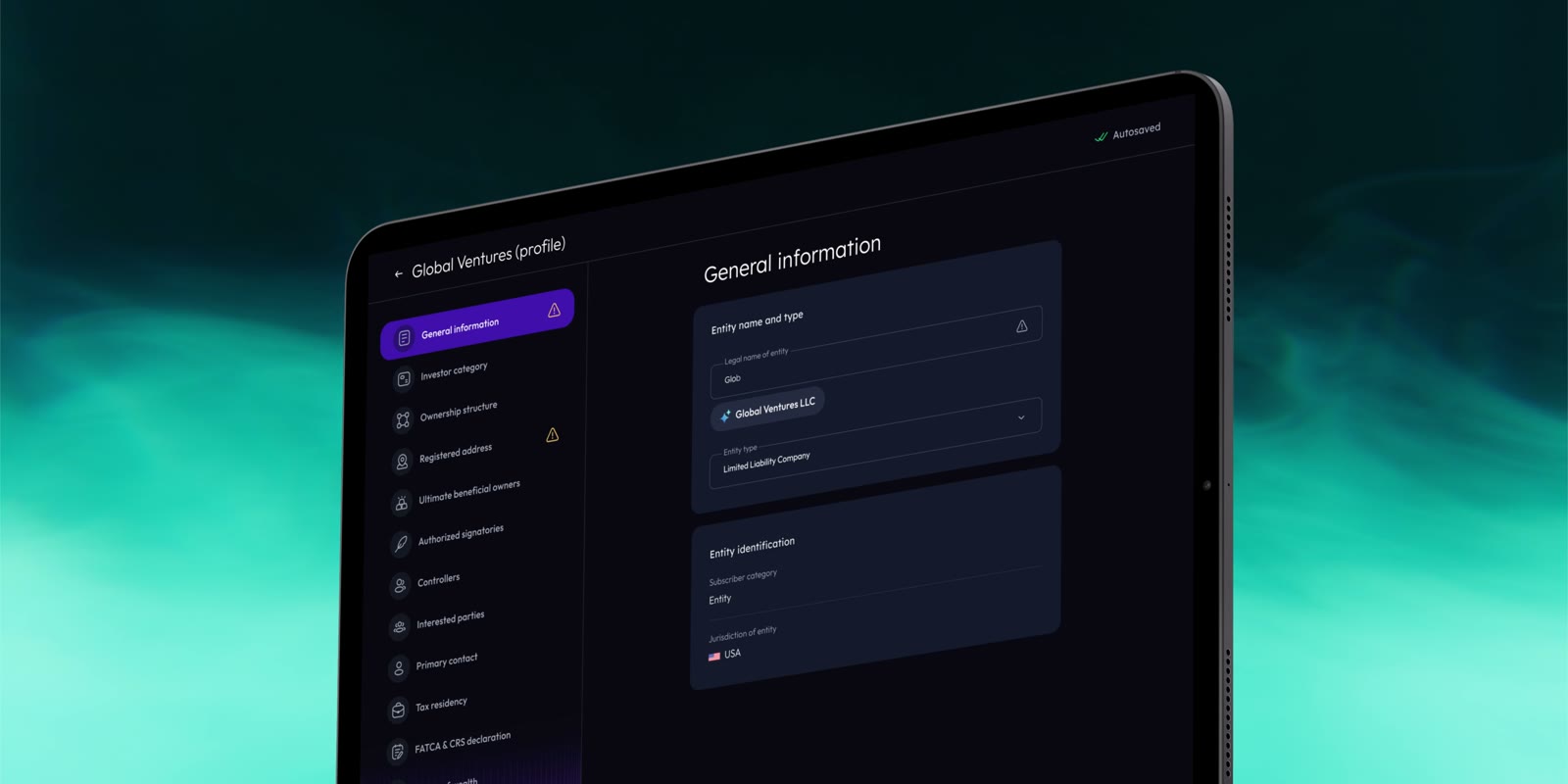
KYC/Onboarding re-imagined with AI agents
Agentic pipeline for KYC and onboarding - documents, checks, and explainable handoff.
AI · Development
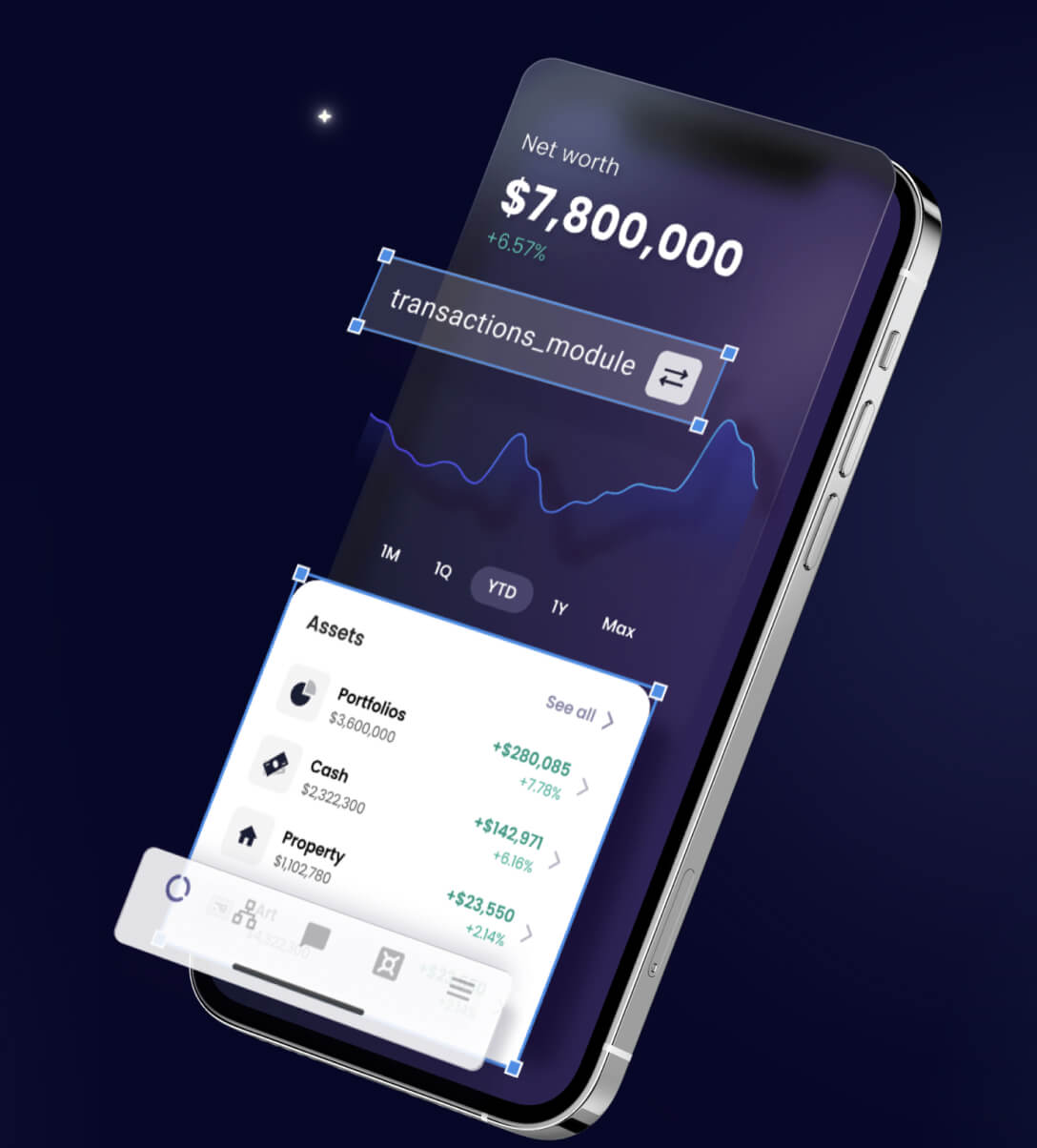
Accelerating personalized health protocols with agentic AI
Modular agents parse clinical documents, assess risk, and compose protocols in under five minutes.