
The complexity of multi-channel patient recruitment platforms in clinical trials
 Windmill Editorial Team2 min to read
Patient recruitment in clinical trials: a multi-channel mix where traditional methods meet digital platforms, a variety of communication mediums, and where reaching the right participants feels like finding a needle in a haystack.
How do we work through this complexity?
In the clinical trials sector, patient recruitment is the essential first step, setting the foundation for successful research outcomes. However, the field has evolved dramatically with the adoption of multi-channel patient recruitment platforms. While these platforms promise enhanced reach and engagement, they also bring many barriers, challenges, and driving the cost of inefficiencies.
Barriers are present throughout. One of the most challenging is the fragmented nature of communication channels. From social media to healthcare provider referrals, from online communities to print advertisements, the options are endless.
Working across these fragmented channels requires strategic planning and resource allocation, often leading to inefficiencies and redundancies.
Moreover, the diverse demographics and preferences of potential participants add another layer of complexity. What works for one segment may fall flat for another. Tailoring recruitment strategies to specific target audiences becomes a daunting task, requiring deep insights and constant adaptation.
Additionally, regulatory hurdles pose another challenge. With stringent data privacy regulations and ethical considerations, ensuring compliance across channels becomes a priority The need for strong consent mechanisms and data security measures adds another layer of complexity to an already demanding process.
Measuring the effectiveness of multi-channel recruitment efforts poses a major challenge. Unlike traditional methods with tangible metrics, such as call volumes or flyer distribution, tracking engagement across digital platforms is less straightforward. Metrics like click-through rates, conversion rates, and engagement levels provide valuable insights but require advanced analytics tools and expertise.
So, how do we manage all of this? The key lies in strategic integration and workflow optimisation.
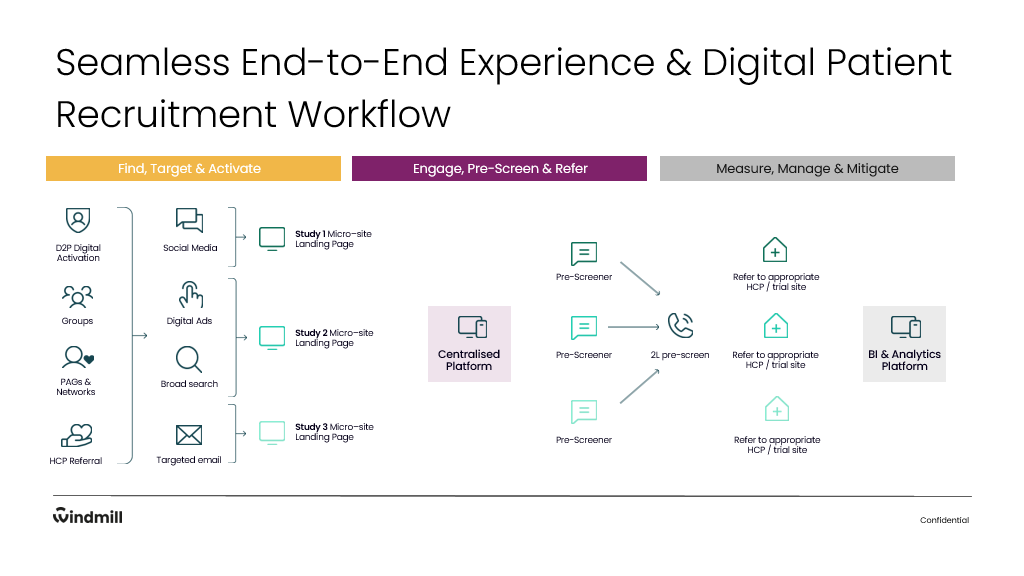
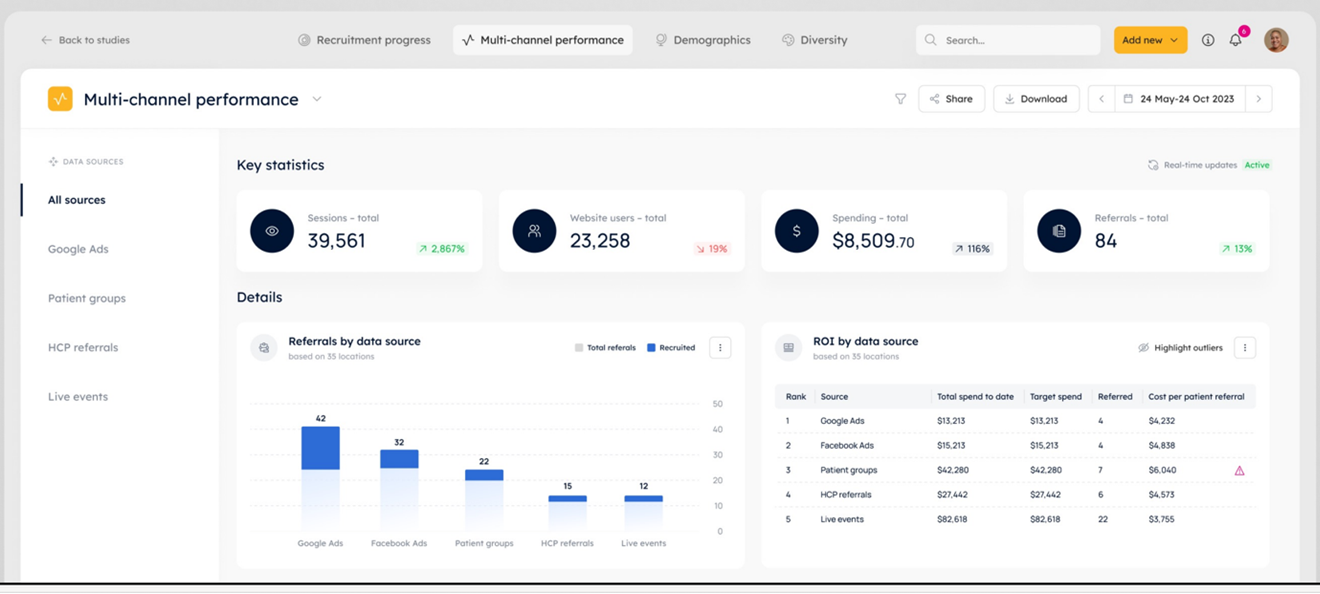
Windmill Digital Healthcare are central to shaping digital workflows, real time recruitment dashboard and have created a solution to view recruitment performance as a whole.
Benefits:
By using data-driven insights, complex analysis of reporting, and simplifying processes, we can:
- enhance efficiency and effectiveness;
- provide better insights with faster and more agile process;
- making it easier to measure the return on investment (ROI).
Moreover, adopting a patient-centric approach is essential. Understanding the needs, preferences, and concerns of potential participants enables us to support the client in tailoring specific recruitment strategies.
Conclusion:
In conclusion, the complexity of multi-channel patient recruitment platforms presents numerous challenges in clinical trials. Working through these challenges requires strategic planning, new thinking, and a patient-centric mindset. By overcoming these barriers and inefficiencies, we can realise the full potential of multi-channel recruitment, advancing medical research and improving patient outcomes.