
KYC/Onboarding re-imagined with AI agents
Agentic pipeline for KYC and onboarding - documents, checks, and explainable handoff.
KYC workflow design and engineering
Built with 1PLTFRM, an affiliated Windmill venture in private markets.
This case explains the workflow and review controls. It does not report an independently verified production benchmark.
Fintech
Agents, UX, Sprint
Windmill’s contribution
AI workflow work with 1PLTFRM
Windmill mapped the advisor journey, designed the review experience and engineered the document-to-profile AI workflow.
Visit 1PLTFRM →The workflow
01
Collect the evidence
An advisor uploads identity, address and tax documents and can follow their processing progress.
02
Prepare the profile
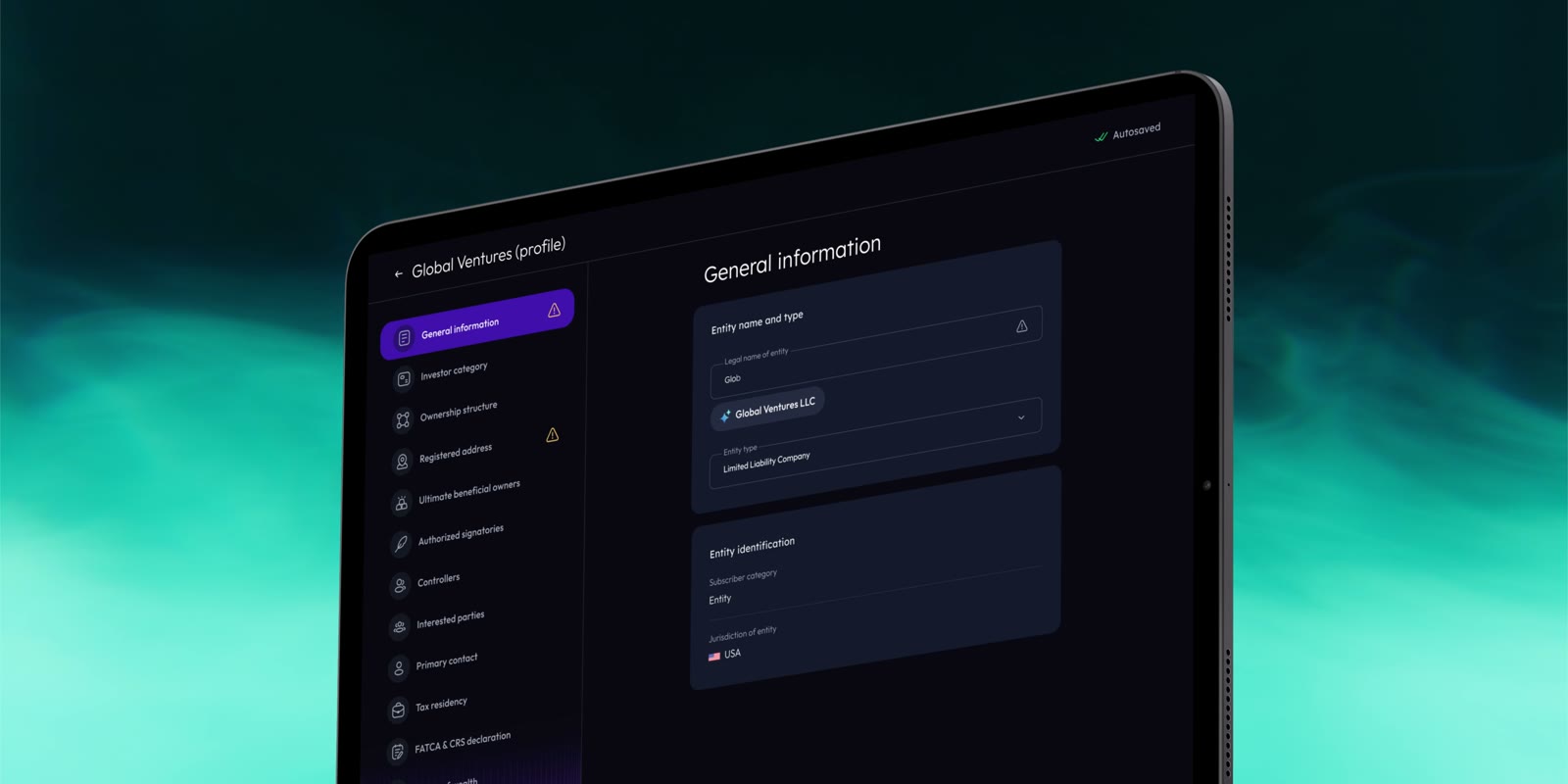
Extracted information becomes suggested profile fields. Missing or conflicting information is surfaced for review.
03
Review and correct
The advisor validates or overrides suggestions field by field, with the source document and review record available.
Context and objective
We designed a multi-agent KYC/onboarding pipeline: intake, extraction, risk flags, and a human-on-the-loop interface. The system runs on sandbox data first, then production with evals and audit trails.
The operating problem
Investor onboarding combines documents, profile information and checks across different jurisdictions. The work focused on the advisor’s journey from document collection to final review, including the points where incomplete or conflicting information needs a person’s judgement.
From documents to reviewable suggestions
The solution brings multi-document upload, processing progress and suggested form values into the same experience. Extracted information is mapped to profile fields so the advisor can inspect it alongside the supporting document instead of moving between disconnected tools.
Exceptions remain visible
Missing information and conflicts are surfaced for review. Advisors can validate or override suggested inputs field by field. The important design decision is to make correction part of the workflow, with a record of the action, rather than treating a generated value as a completed check.
What this work demonstrates
The case shows how document processing, a usable review interface and an audit trail fit together. For a new institution, representative documents, acceptance criteria and integration boundaries would be agreed before a rollout decision. Handling time and field quality need to be measured in that institution’s own operating context.
Applying this to your workflow
What to test for your institution
Can your team reduce repeated data entry while keeping exceptions and final review under its control?
These are example evaluation scenarios for a new engagement. They are not reported test results from this case.
- Conflicting information
- Provide two documents with different addresses. Check that the conflict remains visible and a reviewer can resolve it.
- Missing evidence
- Leave a required field unsupported. Check that the workflow asks for evidence instead of treating a suggestion as complete.
- Reviewer correction
- Change a suggested value. Check the saved value, its source and the record of the reviewer’s action.
- Handling time and rework
- Compare the existing process and proposed workflow on the same representative cases. Include correction time and reviewer effort.
A Proof of Value can establish a working slice, representative evaluation cases and the evidence for your next investment decision. Scope and acceptance criteria are agreed for your workflow.
Start with the engagement that matches the work in front of you.
Windmill can join at early direction, proof, production or evaluation of a live system. Existing work does not have to be restarted or replaced.
More Work
Related Case Studies
AI · Development
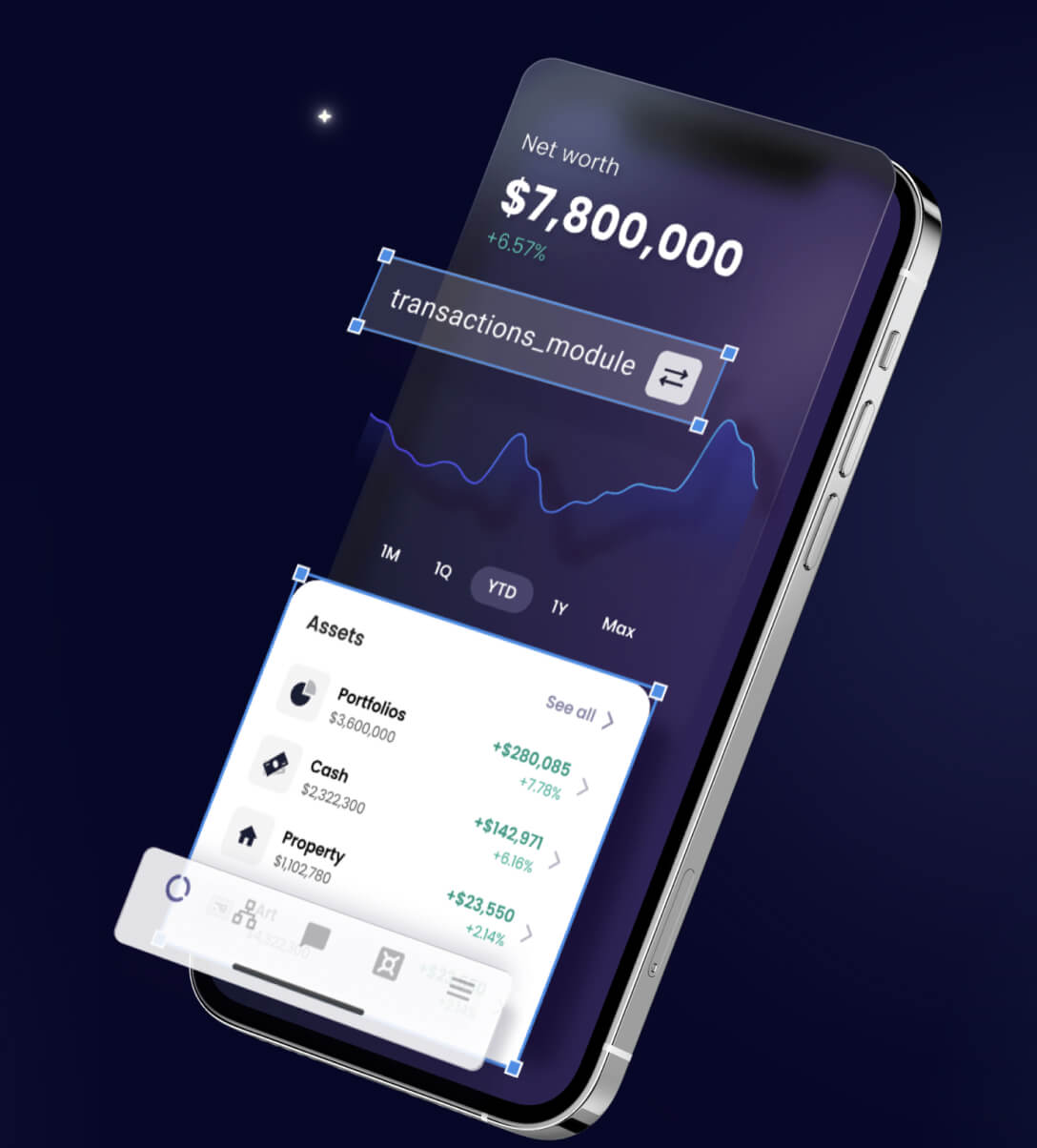
Accelerating personalized health protocols with agentic AI
Modular agents parse clinical documents, assess risk, and compose protocols in under five minutes.
AI model · AI · Design · Development
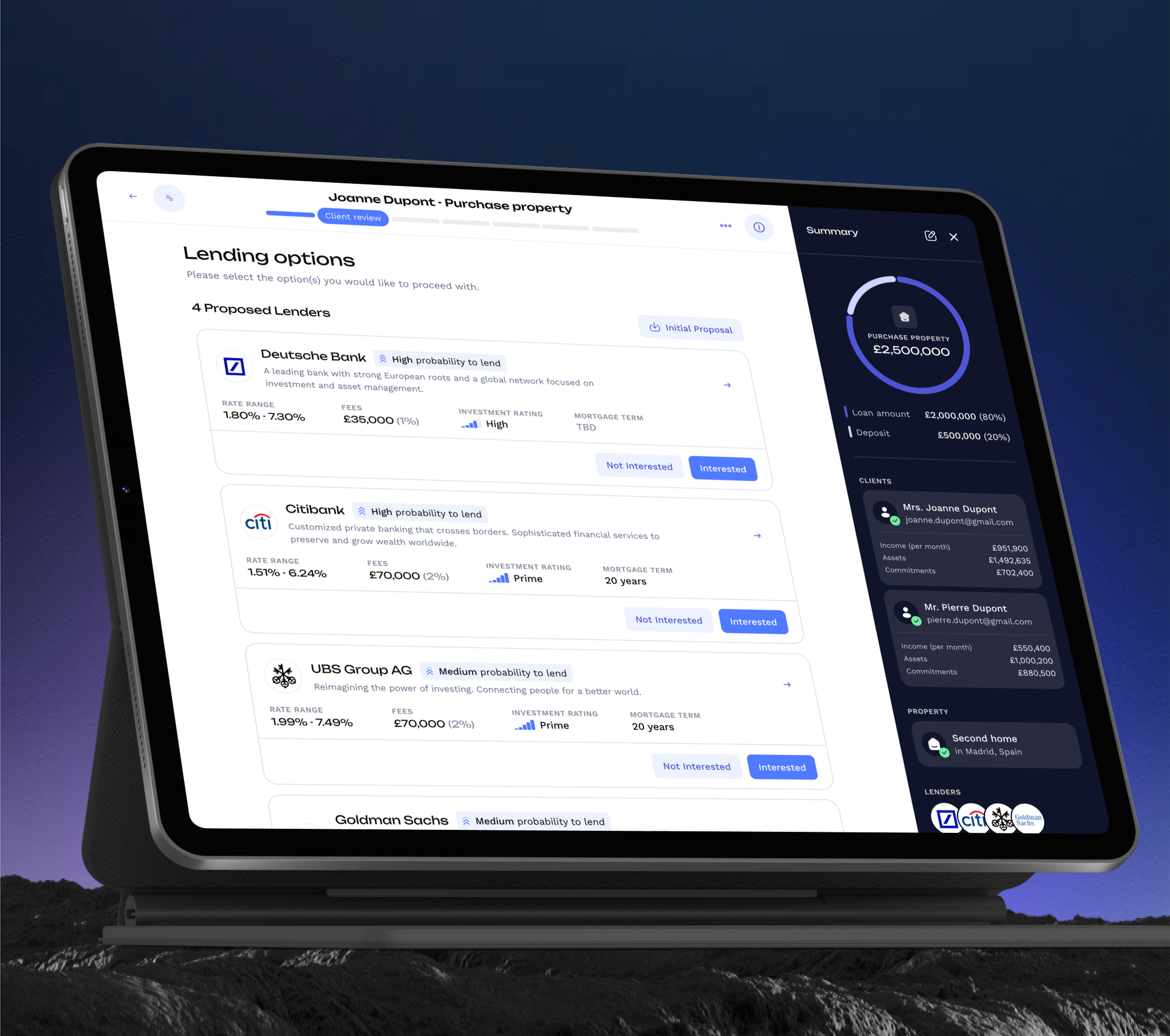
Transforming loan acceptance predictions using artificial intelligence
From credit data to an explainable acceptance model wrapped in a usable decision experience.